Yao Ethnic Group
Introduction
The Yao ethnic group is one of the recognized ethnic groups in China, predominantly residing in the southern regions, particularly in South China's Guangxi Zhuang autonomous region. The Yao people are known for their rich cultural heritage, which is intricately woven into their daily lives. They have a unique cultural identity that is expressed through their traditional clothing, languages, festivals, and customs.
History
Origins
The origins of the Yao ethnic group trace back to ancient China. Their lineage and traditions are believed to be rooted in Hunan province, Guangdong province, and Guangxi Zhuang autonomous region, where the majority of the Yao population resides today.
Migration Patterns
The migration patterns of the Yao ethnic group have historically been influenced by geographic, economic, and social factors. Primarily, they settled in the mountainous and fertile regions of southern China. This strategic choice allowed them to develop a sustainable agricultural economy, primarily focusing on rice farming. The Yao people have also ventured beyond China's borders, establishing communities in countries like Vietnam, Laos, and Thailand, where they continue to maintain their cultural practices while adapting to new environments.
Culture
Language and Literature
Languages spoken by the Yao people are diverse and include several dialects. These languages belong to the Miao-Yao language family, characterized by tonal variations and unique syntactic structures. Despite the linguistic diversity, the Yao people have a robust oral tradition, with songs, folklore, and stories being integral to their cultural transmission. In addition to oral literature, the Yao community has developed a rich tapestry of traditional songs and dances, often performed during festive occasions and communal gatherings.
Traditional Clothing
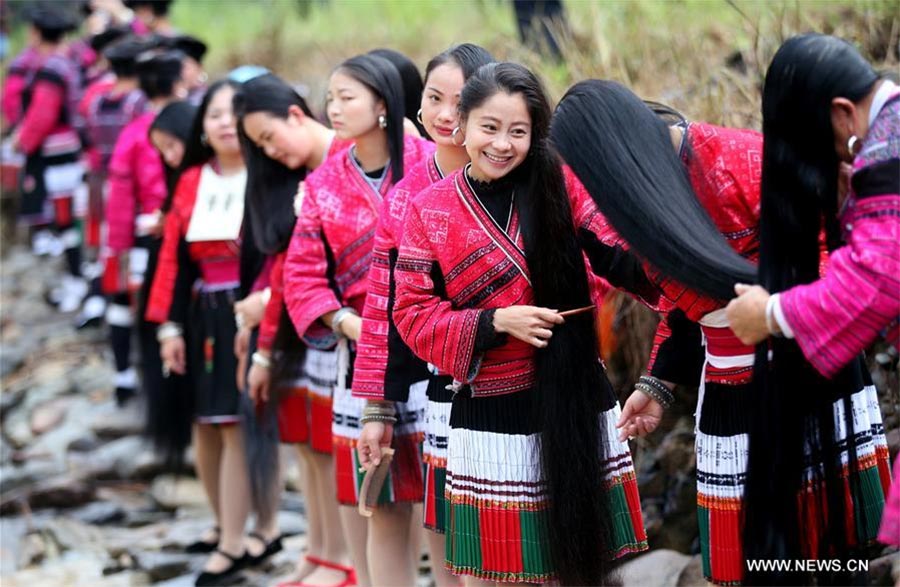
Traditional clothing is an important aspect of the Yao ethnic identity. The Yao people are renowned for their elaborate and vibrant attire, which varies among subgroups. For instance, the Red Yao, a subgroup residing in Longsheng county, are known for their striking red outfits, which symbolize prosperity and joy. Typically, Yao women wear intricately embroidered jackets and skirts, often complemented by silver or other decorative accessories. The craftsmanship involved in creating these garments, particularly the embroidery, is a skill passed down through generations, preserving their cultural heritage.
Festivals and Celebrations
Festivals hold a special place in Yao culture, serving as occasions for communal bonding and cultural expression. Among the notable festivals is the Sanyuesan Festival, celebrated on the third day of the third month on the traditional Chinese calendar by many ethnic groups. During this festival, the Yao people partake in various cultural activities, including singing, dancing, and the showcasing of traditional clothing. Another significant festival is the Clothes Drying Festival, celebrated by the Red Yao. This event involves hanging their distinctive red garments in the sun as a blessing, accompanied by singing, dancing, and other communal activities. These festivals are pivotal in strengthening cultural identity and fostering a sense of unity within the Yao community.
Economy and Livelihood
The Yao ethnic group primarily relies on agriculture for their livelihood, with rice cultivation being the cornerstone of their economy. In addition to farming, they engage in various traditional crafts, such as embroidery and tea production, which are significant sources of income and cultural preservation. The oil tea, a unique beverage of the Yao, exemplifies their traditional knowledge and has gained recognition as an intangible cultural heritage. Moreover, tourism has become an increasingly important economic driver, with many Yao communities embracing eco-tourism and cultural tourism to showcase their traditions and landscapes to a global audience.
Cultural Preservation and Promotion
Efforts to preserve and promote the cultural heritage of the Yao ethnic group have intensified in recent years. Regional governments and cultural organizations have recognized the importance of safeguarding Yao traditions, leading to initiatives that document and promote their unique arts, crafts, and customs. Intangible cultural heritage recognition, such as the acknowledgment of Yao embroidery, plays a crucial role in ensuring the transmission of traditional knowledge to future generations. Additionally, tourism has provided a platform for cultural exchange and increased awareness of the Yao ethnic group's rich heritage on a global scale.








